

By Elisha Singira
Scientist from the International Centre of Insect Physiology and Ecology (ICIPE) report the availability of important bacteria in the gut of the mealworm (Alphitobius) which help in the digestion of plastic.
Dr. Fathiya Khamis, ICIPE Senior Scientist, and lead researcher of the study says “Although often mistaken for ordinary worms, mealworms are the larvae of the darkling beetles. Worldwide, yellow mealworms, the larvae of the darkling beetle species called Tenebrio molitor, have been used to biodegrade plastic. However, this is the first time that the lesser mealworms, which are native to Africa, have been documented to have this capacity.”
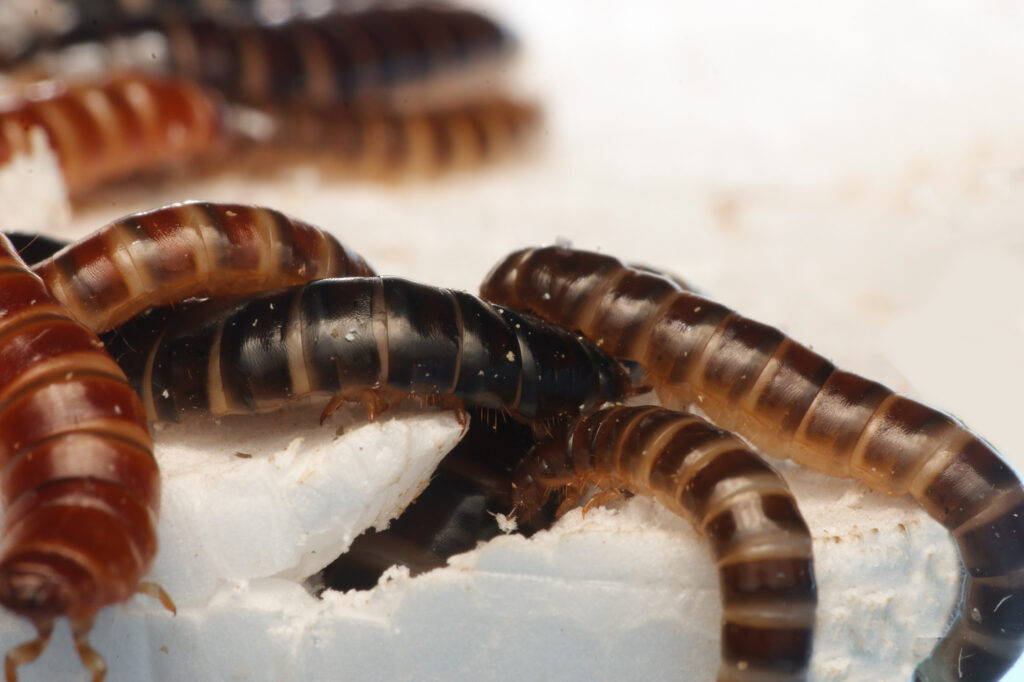
Lesser mealworms feeding on styrofoam
In a paper published in Scientific Reports journal, the researchers report the potential of the lesser mealworm to consume plastic. Thus, either the mealworm or the bacteria could be harnessed to biodegrade plastic.
Globally, more than 400 million tonnes of plastic are produced annually; less than 10% is recycled and an estimated 19 – 23 million tonnes end up in lakes, rivers and seas. Plastics may contain toxic chemicals, and the waste contaminates water, affects quality of soils, ecosystems and essential services, creates breeding grounds for mosquitoes, and ends up in the food chain. While Africa produces only 5% and consumes 4% of global plastic, there is increased use of single-use plastic. The continent is now the world’s second most polluted.
The ICIPE researchers tested the ability of the lesser mealworm to consume polystyrene, one of the major micro plastics that is fast accumulating both in land and water bodies. Polystyrene waste comes from the commercial application of its most common form, Styrofoam. This material is used in food storage containers, packaging of equipment, disposable plates and cups, and insulation in construction. Various methods, including chemical, thermal and mechanical, are used to recycle polystyrene. However, these approaches are expensive and they also produce toxic compounds that are harmful to human, environment and biodiversity.
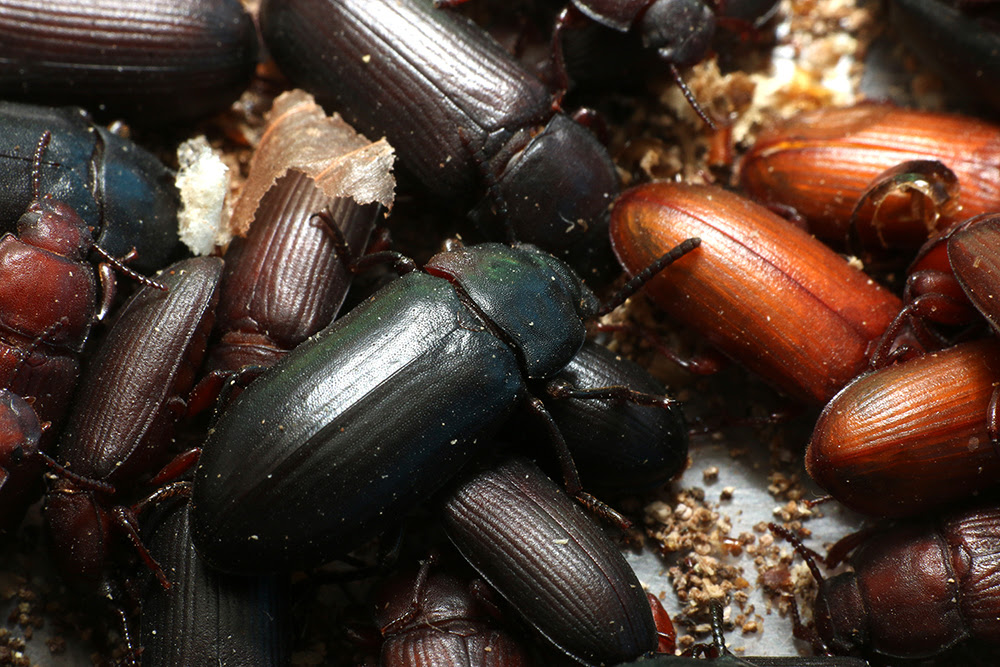
Darkling beetle species
According to Evalyne Ndotono, an ICIPE PhD scholar, the study showed that the mealworms can ingest close to 50% of the Styrofoam. She says that they aim to conduct further studies to understand the process through which mealworms consume polystyrene, and whether they gain any nutritional benefits from the material
She notes that they will also explore the mechanisms of the bacteria in the lesser mealworm in the degradation of plastic. This is because they want to understand if the bacteria are inherent in the mealworms, or if they are a defense strategy acquired after feeding on plastic. Additionally, the scientists will research the ability of the lesser mealworm to degrade diverse types of plastics and to convert it into useful, safe products.
According to Dr. Abdou Tenkouano, ICIPE Director General, “Our research boosts ICIPE’s growing body of innovations for a circular economy. We can exploit this knowledge to solve the plastic waste pollution, while also harnessing the benefits of mealworms, which are part of the population of highly nutritious edible insects.”
The ICIPE study also increases knowledge on bioremediation (the use of microbes to clean up contaminated ecosystems soil and groundwater applications). The Centre will explore collaborative research and innovation efforts with other scientists, policymakers and industry partners, to harness the full potential of lesser mealworms and other similar organisms.
Leave a Reply